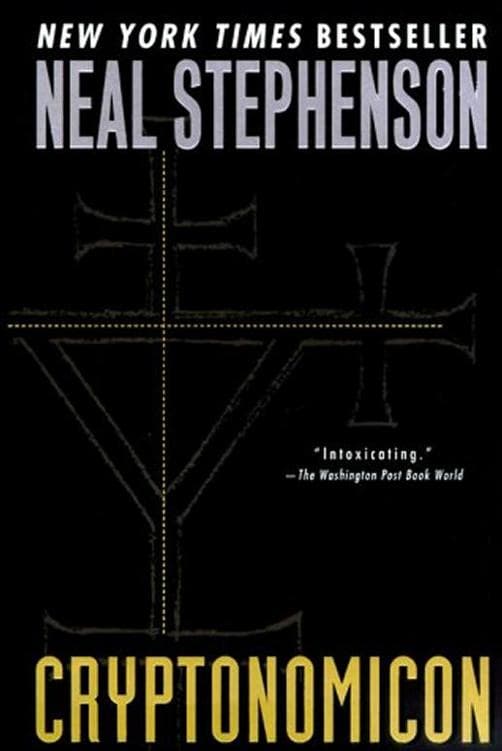
The Ledger That Knew Too Much
The opening chapter of *Cryptonomicon* drops you into Shanghai in late November 1941, and the first thing you notice—twenty-seven years later—is that Stephenson chose to begin a novel about cryptography with a scene about moving money. Not codebreaking. Not Turing machines. Money. Specifically, coolies hauling physical currency through streets so dense with bodies that the Marines can barely move. The silver is real, the labor is real, the chaos is real, and the entire system is about to be rendered meaningless by violence. Stephenson understood something in 1999 that most of his readers wouldn't fully grasp until Bitcoin's white paper appeared nine years later and the subsequent decade of cryptocurrency mania made it unavoidable: that the story of encryption and the story of money are the same story. The novel's dual timelines—World War II codebreakers and late-1990s techno-libertarians building a data haven—converge on this insight with a patience that now looks less like plot architecture and more like prophecy. He anticipated the cypherpunk dream of cryptographically secured, stateless currency not as abstraction but as narrative inevitability, rooted in the physical absurdity of hauling silver through a war zone. The data haven in the fictional Sultanate of Kinakuta prefigures not just offshore crypto exchanges but the entire philosophical apparatus that would later justify them—the conviction that information wants to be free and that money, properly understood, is information.
What Stephenson got right is almost unsettling in its specificity. The novel's treatment of signals intelligence as the hidden architecture of geopolitics anticipated the Snowden revelations by fourteen years. Its portrait of the tech entrepreneur as a figure caught between idealism and complicity now reads as a template for every founder who ever testified before Congress. The Epiphyte Corporation's business plan—secure communications infrastructure in Southeast Asia, financed by venture capital, entangled with governments it claims to circumvent—could be a case study from a 2020s startup pitch deck, right down to the willful naïveté about who actually benefits. Even the novel's obsession with the physical layer of the internet—undersea cables, data centers, the sheer materiality of digital infrastructure—predicted a conversation that wouldn't become mainstream until cloud computing made everyone briefly forget that servers are real objects in real places, and then supply chain crises and submarine cable sabotage made everyone remember again.