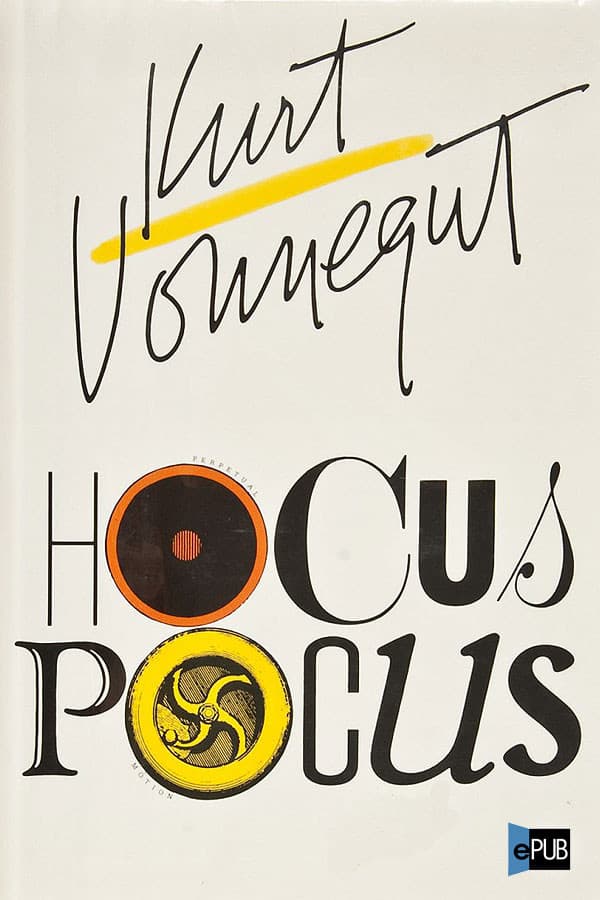
The Warden Who Kept Lists
Vonnegut published *Hocus Pocus* in 1990, the year the Cold War ended and everyone was supposed to feel optimistic. He did not feel optimistic. He wrote a book about a country sold off to foreign investors, a prison system run for profit by Japanese corporations, a college for rich kids who can't learn much sitting across a frozen lake from ten thousand incarcerated men, and a veteran who keeps two running tallies — people he killed, women he slept with — to see which number is higher. The setup sounds like satire. In 2026 it reads more like regional fiction. Private prisons are no longer a dark joke requiring explanation. The foreign ownership didn't materialize as Japanese specifically — Vonnegut was writing from the late-1980s panic about Japan buying Rockefeller Center — but the broader mechanics he described, the hollowing out of American institutions and their sale to the highest bidder, turned out to be structurally correct even if the buyers' nationalities shifted. He got the verb right and the noun wrong. The college that exists to warehouse the unteachable children of the wealthy, meanwhile, barely qualifies as exaggeration; it is a business model now operating at scale under various brand names. What Vonnegut could not have anticipated is the degree to which the prison and the college would merge conceptually — surveillance architectures, behavioral management systems, the same software vendors selling to both. He imagined them across a lake from each other. They share a cloud now.
Eugene Debs Hartke is one of Vonnegut's most complete narrators, which is to say he is the most broken. A Vietnam veteran who became a teacher who became a warden who became a prisoner, he cycles through American institutions the way water cycles through a filtration plant, picking up contaminants at every stage. His lists — the killed, the bedded — are an accounting exercise that doubles as a confession and triples as a joke about the inadequacy of numbers to capture a life. In 1990 this felt like a character study. Now it feels like a premonition of the quantified self, the reduction of experience to metrics, the belief that if you can count something you have understood it. Hartke knows his numbers don't add up to meaning. He keeps them anyway. That compulsion is more legible in an era of dashboards and engagement scores than it was when the book appeared.
The blind spots are real and worth naming. Vonnegut's America is disintegrating along axes of class and race, and he sees both clearly enough, but his women remain largely instrumental — wives who go mad, older lovers who provide comfort, daughters who drift away. Andrea Wakefield gets a few good scenes. Mostly the women are there to illustrate what the men have lost. The racial politics are earnest and sometimes clumsy; the escaped prisoners declaring a Black republic in the Mohiga Valley is treated with a sympathy that nonetheless keeps the camera on the white narrator's face. Vonnegut knew this was a limitation. He built it into Hartke's character — the man who always ends up in charge of other people's catastrophes without ever quite belonging to them. But knowing your limitation and transcending it are different operations. The book also has nothing to say about digital technology, which is forgivable for 1990 but means its vision of societal collapse is almost pastoral. The prisoners watch old TV reruns. Nobody is radicalized by an algorithm. The absence is conspicuous only because Vonnegut was usually better than his contemporaries at sensing which machines would reshape the room.