The War You Fight in Grammar
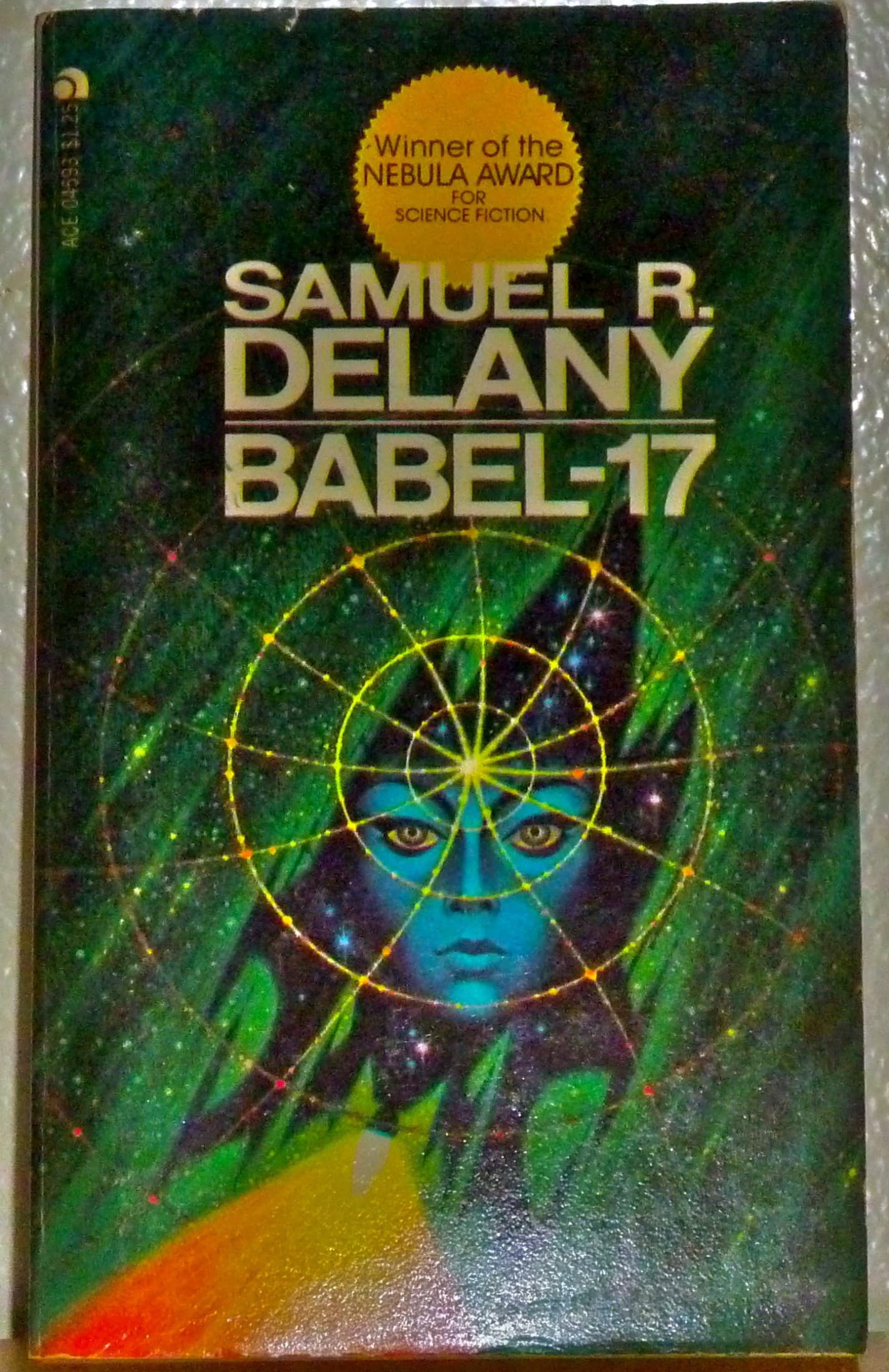
Sixty years on, Babel-17 reads less like a novel and more like a detonation that arrived early. Delany's central conceit — that a language could be weaponized not as code but as cognitive infrastructure, reshaping the thoughts of anyone who learns it — was speculative linguistics in 1966. In 2026, it is closer to a design document. We have watched large language models alter the cadence of human reasoning, seen prompt injection turn syntax into an attack vector, and observed how the structure of a platform's interface language nudges populations toward polarization or compliance. Delany didn't predict GPT-4 or algorithmic feed curation, but he grasped something more fundamental: that the container shapes the contents, and that whoever controls the grammar controls the war. The Sapir-Whorf hypothesis, which the novel rides hard, has been softened and complicated by subsequent linguistics research — we know language influences but does not imprison thought quite as totally as Babel-17 suggests. Yet the novel's exaggeration now feels less like error and more like useful warning. The totalizing version may be wrong about natural languages. It may be uncomfortably right about artificial ones.
What Delany got magnificently right is the entanglement of identity and language. The Butcher — the Macellaio — cannot conceive of "I" or "you" because his brain damage has severed the linguistic architecture of selfhood. This is not metaphor; it is the novel's most literal plot mechanism, and it lands with strange force in an era when we debate whether chatbots possess selves, when dissociative disorders are discussed in the grammar of TikTok, and when entire online communities construct identity through the adoption of shared lexicons. The scene where Rydra teaches him the first-person pronoun is almost unbearably tender, and it now carries a weight Delany could not have intended: it echoes every argument about whether a system that can say "I" thereby becomes one. The novel says no — the word must be *inhabited*, not merely produced. That distinction matters more now than it ever has.
The blind spots are period-specific and worth naming. Delany's future is polyamorous, multiracial, queer-adjacent, and populated by resurrections from crystal archives — remarkably progressive for 1966, and still ahead of most science fiction published decades later. But the political economy is curiously vague. The Alliance and the Invaders wage interstellar war, yet the underlying causes remain gestural, almost decorative. The novel treats conflict as a permanent background condition rather than something with material roots, which is a very Cold War assumption dressed in space opera clothing. There is also a striking absence: for a book so obsessed with language, there is no consideration of machine translation, no computational linguistics, no suggestion that the hard problem of Babel-17 might be approached algorithmically rather than by a poet's intuition. Delany's future has faster-than-light travel and the technological resurrection of the dead, but its code-breaking is artisanal. The idea that a language could be *learned into you* by a system rather than by study never crosses anyone's mind. That gap now glows.