The Flood Was the Easy Part
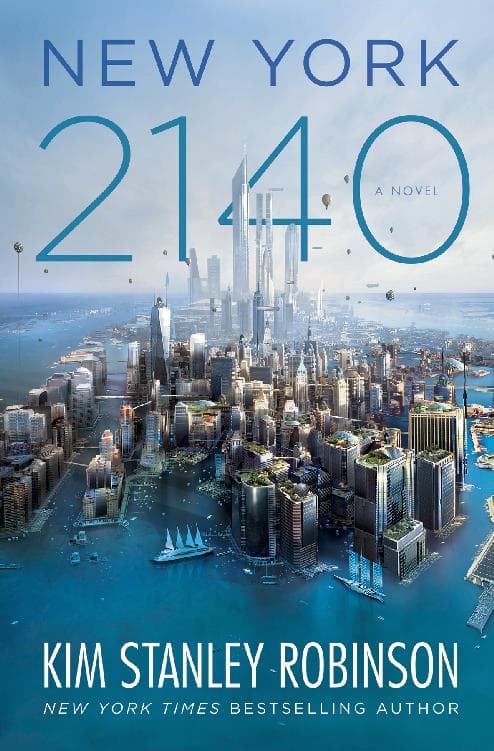
Kim Stanley Robinson published *New York 2140* in the last months before the world began to feel like a Kim Stanley Robinson novel. The book imagines a Manhattan half-drowned by two catastrophic sea-level pulses, its residents improvising a Venice of skywalks and vaporettos, its financial system grinding forward atop the waterline as though nothing fundamental had changed. That last detail — the persistence of capital through apocalypse — is the book's real subject, and it is the part Robinson got most uncomfortably right. We did not need to wait for two meters of sea rise to watch markets absorb catastrophe and reclassify it as opportunity. We watched it happen with a pandemic, with wildfire seasons that became wildfire years, with insurance markets quietly retreating from entire coastlines. Robinson understood that disaster capitalism is not a phase. It is the operating system.
The opening chapter with Mutt and Jeff — two coders who believe they can rewrite the financial plumbing of civilization from a server room — reads differently now than it did in 2017. Then, it carried the residual optimism of the Obama-era techno-left, the notion that if you could just hack the code, you could hack the system. In 2026, after watching crypto evangelists promise the same revolution and deliver a casino, after watching algorithmic trading systems amplify every crisis they were supposed to stabilize, the scene lands as something closer to tragedy. Robinson gives these two men a genuine insight — that prices are lies, that externalities are the real economy — and then lets the plot demonstrate how little insight matters without power. That was always the point, but now it stings rather than inspires. The book's vision of coding as activism has aged the way Occupy Wall Street aged: the diagnosis was correct, the prescription was a pamphlet.
What Robinson could not see from 2017 is how thoroughly the information environment itself would degrade. His New York of 2140 still operates on a shared, if contested, reality. People argue about policy. They form coalitions. They stage a general strike that actually works because enough people agree on what is happening to them. The book assumes that a sufficiently dramatic crisis — literal flooding of the financial district — would produce political clarity. We now know that clarity is not a function of severity. Robinson's blind spot is not technological but epistemological: he imagined a future where the problem was greed and the solution was solidarity, when the actual problem turned out to be that you cannot build solidarity in a society that cannot agree on what the water level is. His characters live in a world without coordinated disinformation campaigns, without algorithmic balkanization, without the peculiar 2020s phenomenon of people filming their own drowning neighborhoods and calling it a hoax. The absence of this noise makes his 2140 feel, paradoxically, more innocent than our 2026.