The Machine That Ate the Poem
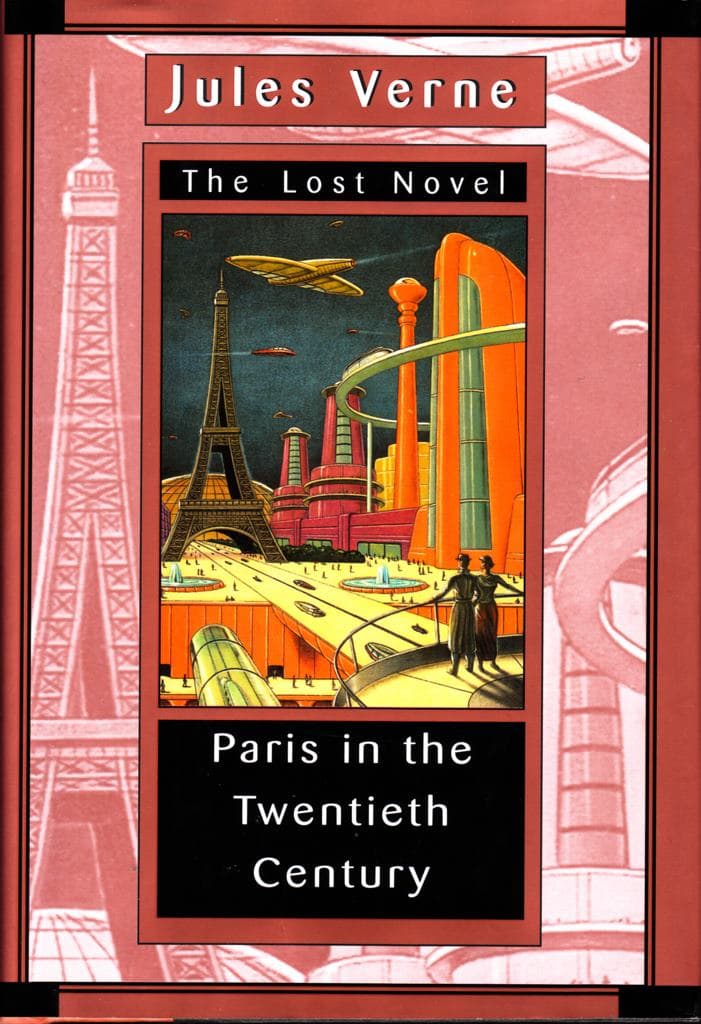
Jules Verne wrote this novel in 1863 and his publisher, Pierre-Jules Hetzel, told him to bury it. Too gloomy, too implausible, too unlike the brand. So it sat in a safe for 131 years, surfacing in 1994 as a curiosity — the lost manuscript, the dark Verne, the one where nobody builds a submarine or circles the globe in triumph. Thirty-two years after its publication and 163 years after its composition, it reads less like a curiosity and more like a diagnosis. Verne imagined a Paris of 1960 where compressed-air trains streak through expanded boulevards, gas-powered carriages have replaced horses, calculating machines dominate finance, and electric light has conquered the night. Fine. What he actually got right was not the hardware but the operating system: a civilization that has optimized itself around utility and profit to the point where it can no longer remember why anyone would write a poem. The Academic Credit Union — a centralized, financialized education monopoly — is not a bad sketch of the modern university restructured around STEM funding, corporate partnerships, and enrollment metrics. Michel Dufrénoy wins a prize for Latin verse and is treated like a man who showed up to a board meeting in a toga. In 2026, the humanities departments that haven't been cut are being "reimagined" as service units for data science programs. Verne didn't need to predict the internet. He predicted the budget meeting.
What Verne could not see — and this is the telling absence — is that the machine would learn to mimic the poem. His dystopia assumes a clean binary: science on one side, art on the other, with science winning by brute economic force. He never imagined a world where the instruments of calculation would themselves begin generating text, composing music, producing images — not because they care, but because pattern completion is what they do. Michel's tragedy is that society has no use for him. In 2026, the more unsettling version of that tragedy is that society has no need for him, because the calculating machines at the Casmodage Bank have taught themselves to write passable alexandrines. Verne's other blind spot is women. Quinsonnas's long speech about how "true women have vanished" is Victorian anxiety dressed in futurist costume, and it tells you more about 1863 than about any plausible 1960. The novel has essentially no female interiority. Lucy exists as a name Michel can collapse in the snow for. The book's social imagination is sharp about class and labor, dull about gender, and entirely silent about race and empire — which, for a Frenchman writing during the Second Empire's colonial expansion, is a silence that speaks.