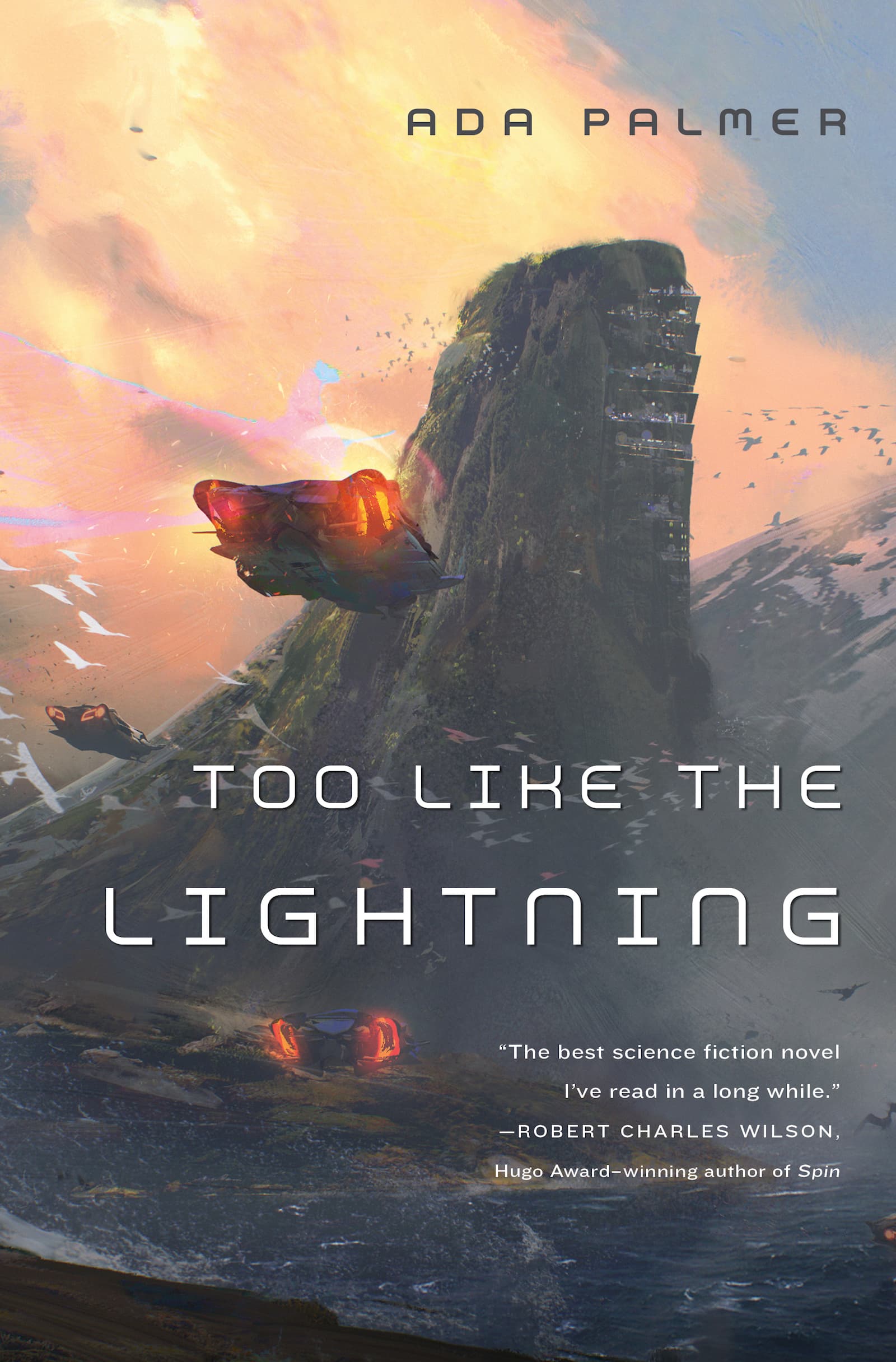
The Hive Before the Swarm
Ada Palmer built a twenty-fifth century where nationality is a subscription you choose rather than a border you're born inside — seven Hives, no more geography, membership renewable and revocable, loyalty a matter of philosophy rather than soil. In 2016 this read as an elegant thought experiment borrowed from Enlightenment cosmopolitanism, the kind of thing a historian of ideas would dream up between seminars. It reads differently now that "network state" has become a term venture capitalists use in pitch decks, now that people organize their politics, their friendships, even their currencies around ideological affinity the way earlier generations organized around inherited citizenship — the geography of blood quietly replaced by the geography of belief. I have written something close to this before, nearly verbatim, in a review filed under this same title, the one that ended by noting that Palmer "imagined a world where nationality is a philosophy you subscribe to, and somehow the Silicon Valley crowd has decided to make it their business plan." That line was true as far as it went. It was also lazy, because it took Palmer's own framing of the Hive system at face value — chosen nationality, subscription over soil — without asking who, inside the novel itself, never got to subscribe to anything.
The consensus on this book, mine included, treats the Hives as the genuine achievement: a post-national order built on philosophical affinity rather than accident of birth, humane where our own nationalism is tribal, elegant where ours is bloody. It's the kind of worldbuilding that gets cited approvingly in essays about post-Westphalian governance. But the text keeps interrupting its own utopia. Eureka Weeksbooth and Sidney Koons are set-sets, cognitively wired into computer systems from childhood, and the chapter that introduces them is explicit that this is a question of "servitude, identity, and the challenges of bridging vastly different human experiences" — nobody in that bash' chose their neural architecture at eighteen the way a Humanist chooses a Hive. Mycroft Canner, the narrator through whose eyes we receive every Enlightenment pleasantry about chosen loyalty, is himself a Servicer — a convicted murderer doing penal labor for life, formally unprotected, owned in practice if not in law by the society that rehabilitated him into usefulness. And the Mitsubishi Hive, whose Chief Director interrogates the narrator over a stolen tracking device, holds its power through literal ownership of land and the people bound to it, a feudal residue dressed in corporate vocabulary. The "subscription" model of identity that critics — and I — found so clever applies cleanly only to the people already free enough to subscribe.