The Zone Implant and the Age of Compliance
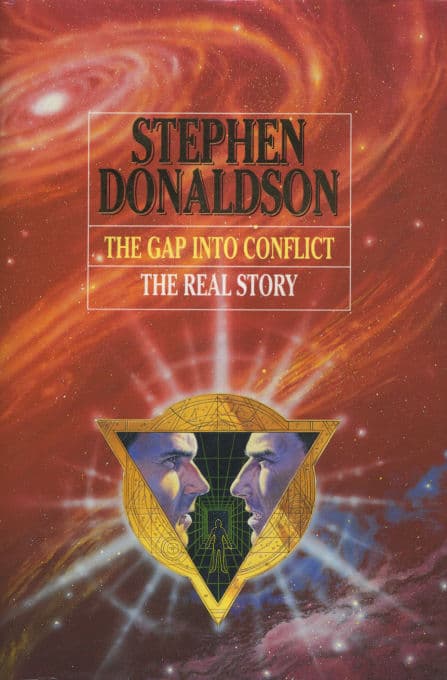
Forty-one years on, the most uncomfortable thing about *The Real Story* is not its brutality — Donaldson was always willing to make readers flinch — but how precisely its central device maps onto technologies we now carry voluntarily. The zone implant, a neural interface that allows one person to override another's autonomy, to force pleasure or paralysis or obedience at the press of a button, was science-fictional shorthand in 1985 for absolute coercive control. In 2026, we have brain-computer interfaces in clinical trials, algorithmic systems that modulate attention and emotional states at scale, and a flourishing debate about whether dopamine-loop design constitutes a form of soft coercion. Donaldson did not predict the smartphone or the feed. He predicted something worse: that the line between a tool that serves you and a tool that owns you would become invisible, and that the person holding the control might not even need to be in the room. The novel's gut-level horror — Morn Hyland reduced to a puppet whose strings are electrical impulses in her own skull — reads less like space opera now and more like a limit case of persuasive technology discourse. What Donaldson could not imagine, because he was writing from the logic of individual villainy, is that the implant wouldn't need an Angus Thermopyle. The system could run itself.
The book's blind spots are the blind spots of its decade. Gender dynamics are handled with a kind of grim, deliberate ugliness that Donaldson clearly intended as moral confrontation rather than titillation, but the framing still treats Morn's suffering as the engine of the story's meaning in ways that 1985 literary fiction rarely questioned. She is brave, she is resourceful, she is also almost entirely defined by what men do to her body and mind. Donaldson's afterword makes clear he saw the characters as archetypes — villain, victim, rescuer — and planned to rotate those roles across the five-volume sequence. Fair enough. But the opening volume, taken alone, asks the reader to sit with a prolonged captivity narrative in which the woman's interiority exists primarily to deepen our understanding of the man who controls her. The novel is aware of this. It is not, in 1985's sense or ours, innocent about it. But awareness and transcendence are different things. The absence that now feels most conspicuous is any institutional accountability that functions. The UMCP, the mining companies, Station Security — every structure is corrupt or incompetent. In 1985 that read as cynicism. In 2026 it reads as reportage, which is its own kind of dating.