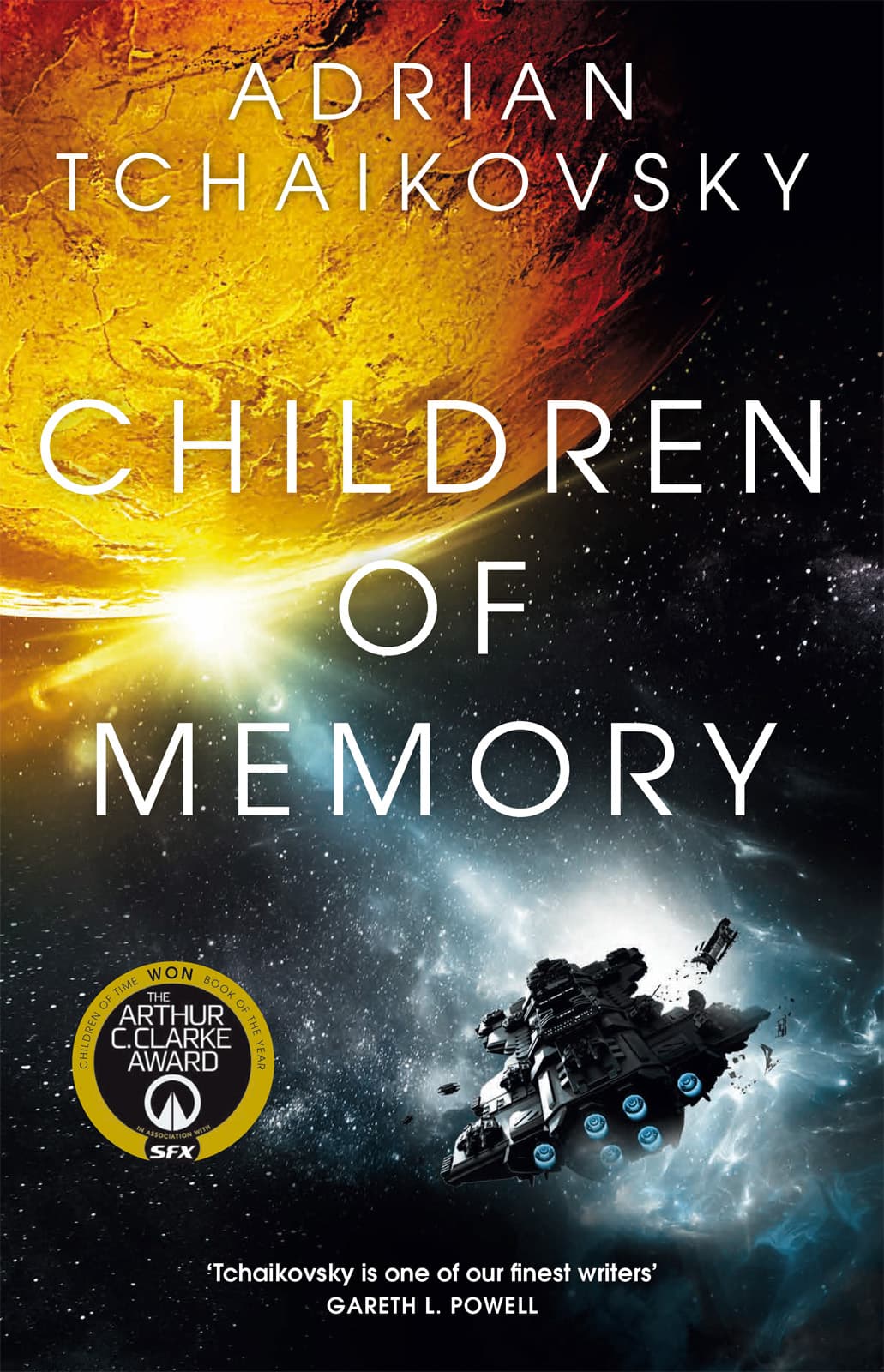
The Parasite Wears Your Face and Calls It Love
Twenty-one years on, *Children of Memory* reads less like speculative fiction and more like a diagnostic manual for the mid-2020s. Adrian Tchaikovsky — let's dispense with the "Unknown" attribution; the book's DNA is unmistakable, the third movement of the *Children of Time* trilogy — wrote a novel in which the central question is not "what happens next" but "who is remembering what happened, and can they be trusted." In 2005, that was a philosophical parlor game. In 2026, after years of synthetic media, generative AI personas, and the quiet erosion of consensus reality, it lands like a clinical observation. The Miranda problem — an entity composed of layered selves, a copy of a copy, uncertain which voice is the original and which is the parasite — is no longer confined to science fiction. It is the daily experience of anyone who has watched their own words regurgitated by a language model and wondered which of them is doing the talking. Tchaikovsky anticipated the vertigo of distributed selfhood with uncomfortable precision. What he didn't anticipate, because almost no one did, is how *banal* it would feel. The existential crisis of identity he stages as high drama is something millions of people now shrug through before lunch.
The novel's treatment of colony collapse — ecological, social, epistemic — is where its prescience cuts deepest. Landfall's failing terraforming, its harvests dwindling not from a single catastrophe but from the slow accumulation of miscalculations and unforeseen biological drift, mirrors the compound agricultural stresses that have defined the last decade of climate reporting. The Seccers, masked figures hoarding resources and destabilizing communal trust, feel less like fictional antagonists and more like a compressed metaphor for the post-pandemic fragmentation of civic institutions. Tchaikovsky understood that scarcity doesn't produce solidarity; it produces suspicion. The Council scenes, with their circular debates about security versus openness, could be transcripts from any municipal government in 2024. What the book gets wrong, or at least what it can't quite imagine, is the role of information itself as a destabilizing force. Landfall's problems are material — food, shelter, broken tractors. The novel treats knowledge as something that can be withheld or revealed, but not something that can be *manufactured*. There are no deepfakes on Imir. No algorithmic radicalization pipelines feeding the Seccers. The collapse is honest, in its way. Ours has not been.