The Machine That Knew You Were Looking
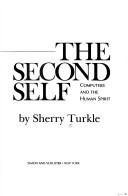
Sherry Turkle's *The Second Self* was first published in 1984, then reissued in 2004 with new introductions that allowed her to annotate her own prophecies. The result is a palimpsest — an ethnography of how people talked about computers in the early 1980s, overlaid with Turkle's reflections on how those conversations had shifted by the early 2000s. Read in 2026, the book becomes a triple palimpsest, and the third layer is ours to write. What strikes hardest is not what Turkle got right about technology, though she got a great deal right. It's what she got right about us. Her central claim — that computers are not merely tools but "evocative objects" that restructure how we think about thinking, aliveness, and selfhood — now reads less like an argument and more like a weather report. We live inside the phenomenon she was describing from its edges.
The prescience is granular and sometimes startling. Turkle documented children in the early 1980s debating whether video game characters were "alive," and she tracked the philosophical gymnastics people performed to distinguish between what a computer "knows" and what a person knows. These were not idle playground arguments. They were rehearsals for the discourse that would engulf us when large language models began passing the mirror test of casual conversation. Her observation that people relate to computers through a logic of "psychological machines" — attributing intention, personality, even feelings — anticipated the parasocial bonds millions now form with AI chatbots. She also saw, decades before social media, that the computer would become a surface for identity performance, a place where the self is not simply expressed but constructed. What she could not imagine, writing in the age of the Commodore 64, was the scale. She studied dozens of people. The evocative object now touches billions, and the construction of self happens not in a hobbyist's basement but on platforms engineered to monetize the very psychological dynamics she described.
The blind spots are instructive precisely because they are the blind spots of an era, not of a careless thinker. Turkle's subjects are overwhelmingly white, male, and either very young or professionally technical — a limitation she partially acknowledges but never fully corrects. The computer culture she maps is one of hackers, hobbyists, and MIT graduate students; it is a culture of access and privilege, and the book has almost nothing to say about what happens when the evocative object is imposed rather than chosen, when the algorithm watches you rather than the other way around. Surveillance, datafication, the political economy of attention — these are absent, not because Turkle lacked intelligence but because in 1984, and even in 2004, the computer still felt like something you went to rather than something that came for you. The 2004 introductions gesture toward the internet but remain anchored in a framework of individual psychology. The collective, structural, and coercive dimensions of computational life barely register. Baudrillard's influence is visible in Turkle's sensitivity to simulation and the slippage between the real and the represented, but she lacks his paranoia, and in hindsight a little paranoia would have served her well.