The Building Remembers What You Forgot to Save
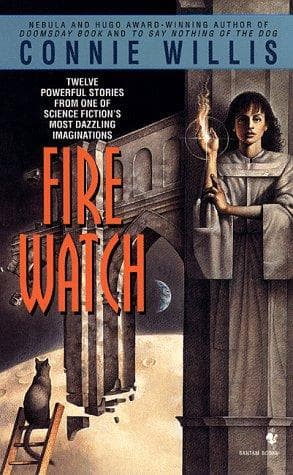
Connie Willis published *Fire Watch* in 1985, when the Blitz was forty-five years gone and time travel was still a clean metaphor. The collection's central conceit — historians sent back to live inside the catastrophes they study — now reads less like speculative fiction and more like a rebuke. Willis understood something that has only sharpened with four decades of hindsight: that the distance between studying a disaster and surviving one is not a gap but a chasm, and that the chasm is where all the interesting moral questions live. Her time-traveling historians arrive in the past with insufficient preparation, wrong assumptions, and a dangerous confidence in their own frameworks. They are, in other words, us — scrolling through footage of wars we will never smell, composing opinions about crises whose texture we will never feel against our skin. The title story's narrator, dumped into the London Blitz to guard St. Paul's Cathedral, discovers that knowing the historical outcome does not inoculate you against terror, love, or the weight of a fire bucket. In 2026, after years of watching real-time atrocities streamed to phones while viewers debate them in comment sections, this lands like a slap rather than a thought experiment.
What Willis got right is almost eerie in its specificity, not about technology but about epistemology. The collection returns again and again to the problem of mediated knowledge — the difference between having information and understanding it. Her characters wrestle with incomplete archives, mistranslated texts, selective biblical quotation, lost manuscripts. The story about the missing copy of *St. Paul's in Wartime* is played for gentle irony, but it anticipates our current crisis of archival fragility with unsettling precision: link rot, disappearing digital records, the quiet erosion of institutional memory that accelerated through the 2020s. The twin study story, with its narrator's visceral discomfort at the implications for free will, now reads against the backdrop of behavioral genetics, algorithmic prediction, and the persistent cultural anxiety that our choices might be less free than we insist. Willis didn't predict the specific mechanisms — she couldn't have imagined large language models or social media recommendation engines — but she identified the existential itch they would provoke.
The blind spots are period-typical and therefore instructive. Willis's futures are remarkably analog in their social architecture. Her space colonies have dorm mothers. Her dystopias run on paper notebooks and physical surveillance, not data harvesting. The clone-by-mail story is a comic sketch that now sits in the shadow of actual CRISPR gene editing and the real bioethics debates Willis could only play for laughs. More telling is what's absent: her futures contain no global climate catastrophe as background radiation, no pervasive screens, no algorithmic curation of reality. The story "The Last of the Winnebagos" (from a later collection, but spiritually adjacent) would eventually address ecological collapse more directly; here, the cottonwood trees overtaking a space colony are as close as she gets, and even that reads as allegory rather than forecast. Her characters are also overwhelmingly white, English-speaking, and Western in their cultural reference points — the Blitz, Browning, the King James Bible. The universalism she reaches for is genuinely felt but structurally narrow.