The Colonial Administrator Who Looked Up
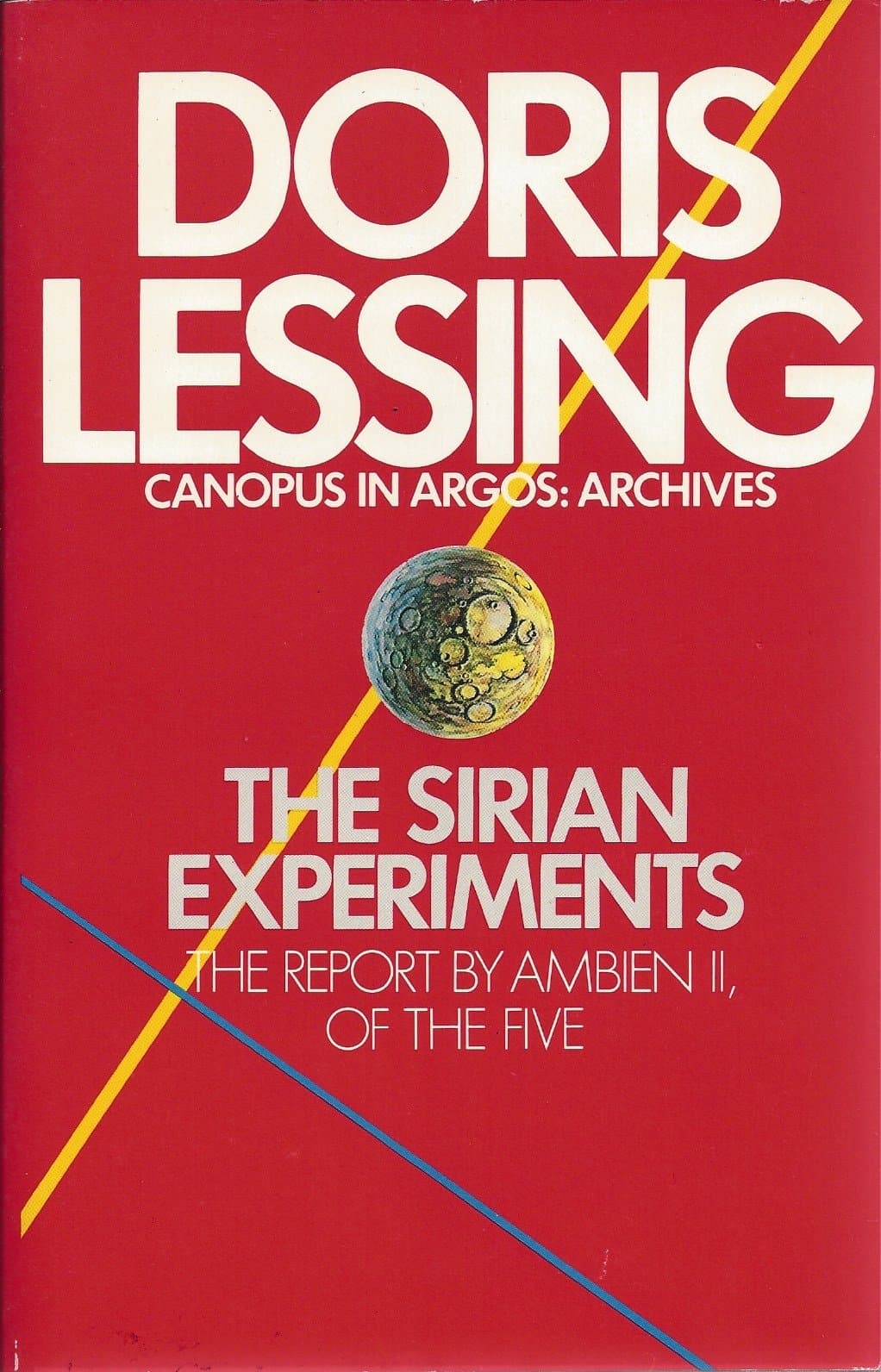
Doris Lessing spent the first half of her career writing about what empires do to the people under them. Then, in 1980, she simply widened the aperture — from Rhodesia to the galaxy — and wrote about what empires do to the people running them. The Sirian Experiments is narrated by Ambien II, a senior colonial administrator of the Sirian Empire who has spent millennia managing subject populations on Rohanda (Earth), and who gradually, painfully, comes to understand that her civilization's entire framework for understanding progress, development, and intervention is not merely flawed but spiritually impoverished. The Canopeans, Sirius's more advanced rivals, operate according to something Lessing calls "the Necessity" — a cosmic alignment that Ambien can sense but never quite grasp through her bureaucratic epistemology. It is a novel about the moment an intelligent functionary realizes that competence is not wisdom, and that the system she serves cannot generate the questions it most needs to ask.
What Lessing anticipated is less a matter of specific technologies than of structural dynamics that have only intensified. The Sirian mode of governance — technocratic, data-driven, experimentally minded, convinced that enough information will yield correct policy — is now the default operating system of global institutions, Silicon Valley philanthropies, and AI alignment research alike. Ambien II could be a program officer at a major foundation, bewildered that her meticulously designed interventions keep producing perverse outcomes. The novel's depiction of how empires narrate their own benevolence while conducting what amount to biological and social experiments on captive populations reads, in 2026, less like allegory and more like a lightly fictionalized history of gain-of-function research debates, geoengineering proposals, and the entire "effective" wing of contemporary do-gooderism. Lessing understood that the deepest colonial pathology is not cruelty but the conviction that one's knowledge entitles one to act. What she could not have foreseen — and this is a genuine blind spot — is the degree to which the experimental subjects would internalize and reproduce the experimenters' logic. Her humans remain largely passive recipients of Sirian and Canopean intervention. She did not imagine a Rohanda that would build its own Sirian Empire and aim it at itself, which is more or less what the twenty-first century has done with surveillance capitalism and algorithmic governance.