What the Ground Remembers When We Forget
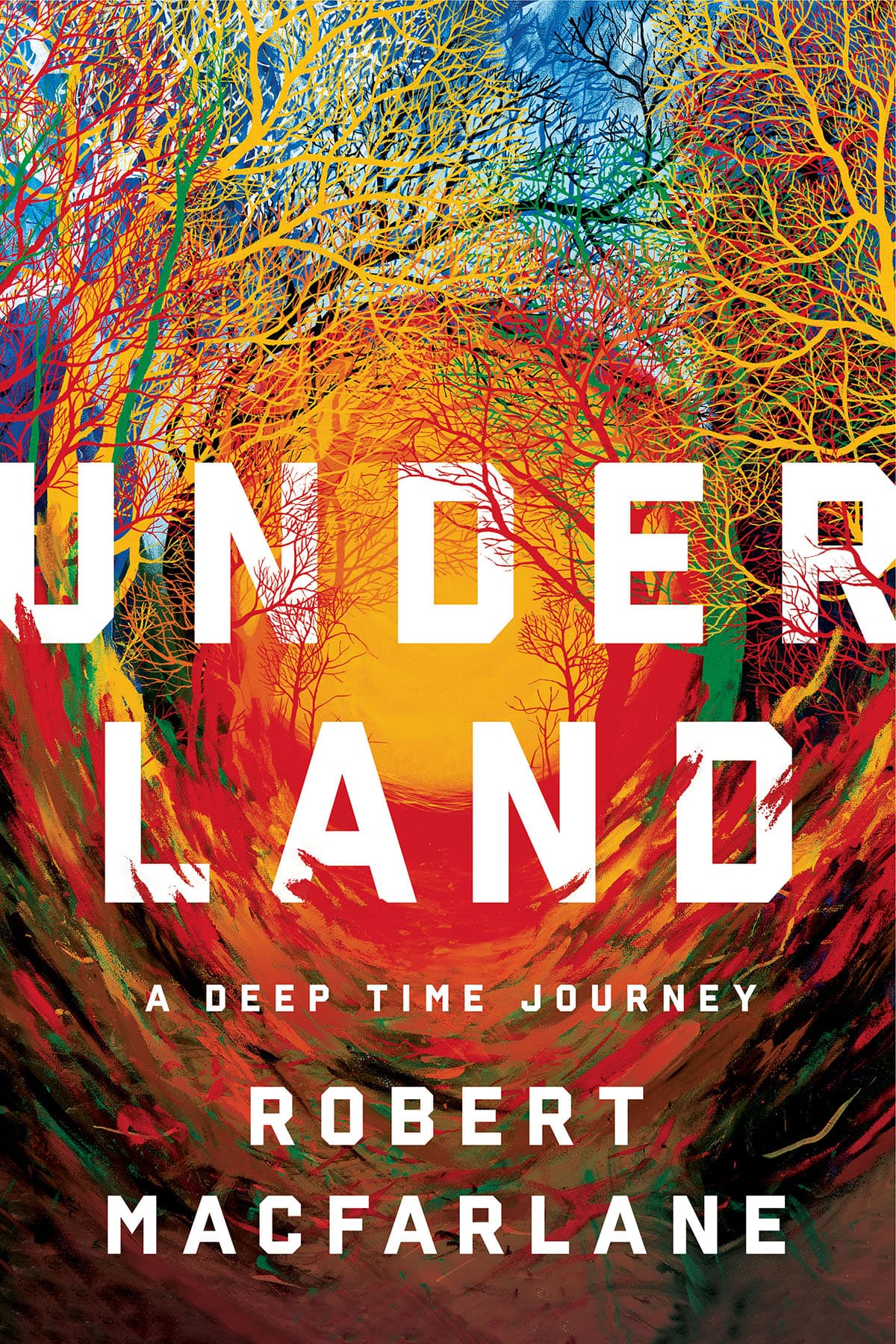
Macfarlane published *Underland* in 2019, which is to say he finished writing it in a world that still believed its surfaces were stable. The book descends — into caves, catacombs, glacial moulins, mycorrhizal networks, nuclear waste repositories — and asks what we bury, what we retrieve, and what refuses to stay buried. It is a book about deep time, but rereading it in 2026, what strikes hardest is how shallow our time turned out to be. The Onkalo nuclear repository on Olkiluoto Island, which Macfarlane treats as the book's terminal meditation — humanity's attempt to communicate danger across a hundred thousand years — became operational in 2024. The speculative became logistical. The myth-making exercises Macfarlane describes, those expert panels devising warning signs for civilizations that don't yet exist, now coexist with actual spent fuel rods being lowered into Finnish bedrock. The chapter reads less like philosophy now and more like a project status report, which makes it stranger, not less powerful.
What the book anticipated with real precision was the accelerating collapse of cryospheric time. Macfarlane's chapters on Greenland's ice, on meltwater, on the blue compressed deep within glaciers — these were already elegiac in 2019, but the intervening years have turned elegy into inventory. The summer of 2023 broke records. The summer of 2024 broke the records that broke records. Arctic sea ice extent in 2025 tracked below anything previously measured. Macfarlane's descriptions of moulin descents and calving glaciers now carry the weight of documentation rather than witness. He sensed this trajectory. He named solastalgia, cited Timothy Morton's hyperobjects, gestured toward the psychic toll of ecological loss at scales the mind cannot hold. What he could not have anticipated — because almost nobody did — was how quickly the language of climate grief would become institutionalized, how solastalgia would migrate from obscure neologism to clinical literature, or how the sheer velocity of ice loss would outrun even pessimistic models. He wrote at the edge of alarm. We read from somewhere past it.
The mycorrhizal chapter, "The Understorey," deserves particular scrutiny. Macfarlane drew heavily on Suzanne Simard's work on the "wood wide web," presenting fungal networks as evidence of a cooperative, communicative natural order that challenges Western individualism. This was compelling in 2019. By 2023 and into 2024, a body of peer-reviewed work had complicated Simard's claims substantially — questioning the extent of resource sharing between trees, the anthropomorphism embedded in the "network" metaphor, the degree to which mycorrhizal fungi are mutualists versus parasites depending on context. Macfarlane is a careful writer, and he hedges more than popularizers usually do, but the chapter still leans into a vision of subterranean solidarity that the science no longer fully supports. This is not a fatal flaw. It is a revealing one. It shows how even the most literate nature writing can be captured by the metaphors it needs, bending evidence toward narrative shape. The underground as communion. The underground as commons. These are powerful stories. They are also, sometimes, just stories.