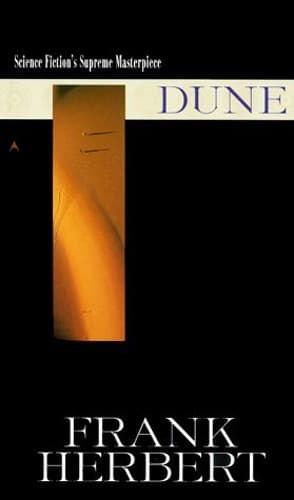
The Prophet Trap
Sixty-one years out, the most discomforting thing about *Dune* is not what it predicted but what it diagnosed. Herbert saw that ecological crisis would become the organizing political fact of an era — that whoever controlled the irreplaceable resource controlled the discourse, the religion, the military deployments, the terms of acceptable thought. He called the resource melange. We called it oil, then lithium, then water, then data, then compute. The substitution hardly matters. What matters is the structure: a single commodity so essential that an entire imperial apparatus deforms itself around its extraction, and the people who live atop it are simultaneously indispensable and disposable. The Fremen are the inhabitants of every resource colony in history, romanticized and instrumentalized in the same breath. Herbert knew this. The uncomfortable question is whether his readers did.
The novel's treatment of religion as technology — engineered, seeded, cultivated across centuries by the Bene Gesserit's Missionaria Protectiva — lands with a specificity that 1965 readers could appreciate abstractly but that now reads like a case study. We have watched, in real time, the deliberate manufacture of prophetic narratives for political ends, the way memes (in Dawkins' original sense, a word that didn't exist when Herbert wrote) can be planted in a culture and activated generations later. Paul knows he is exploiting a prefabricated myth. He does it anyway. The novel never lets him off the hook for this, though many of its readers have tried. Herbert's central warning — that charismatic leaders are more dangerous than the tyrants they replace — was legible in 1965 but has become almost unbearably literal in an age of populist strongmen who frame themselves as liberators while consolidating power through manufactured devotion. Paul's prescience is not a gift. It is a prison that makes the jihad inevitable. Herbert understood that seeing the future does not mean you can stop it.
What the book could not see, or chose not to, is revealing. There are no thinking machines in the post-Butlerian universe, which in 1965 read as an interesting worldbuilding constraint and in 2026 reads as a fantasy more utopian than any terraformed Arrakis. Herbert imagined humanity would reject artificial intelligence and develop human computational capacity instead — the Mentats, the Bene Gesserit's bodily mastery, the Spacing Guild's cognitive navigation. We did the opposite. We outsourced cognition at every opportunity and are now negotiating the consequences. The absence of AI in *Dune* is the book's most dated element precisely because it is the one Herbert thought most carefully about. He was right that the relationship between human and machine intelligence would be civilization-defining. He was wrong about which side would win. The gender politics, too, bear the marks of their decade: Jessica is among the most capable characters in the novel, yet her greatest sin in the eyes of the Bene Gesserit is bearing a son instead of a daughter — her agency defined entirely through reproductive choice made in service to a man she loved. The Bene Gesserit themselves are a matriarchal order whose ultimate goal is to produce a male superbeing. Herbert noticed the pattern. He did not escape it.