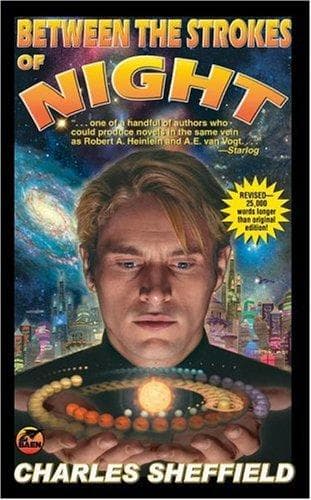
The Slowest Way to Live Forever
Sheffield's central conceit—that human metabolism could be radically decelerated, stretching subjective life across millennia while the objective universe races ahead—remains one of the more elegant workarounds for the lightspeed barrier in hard science fiction. It is not faster-than-light travel. It is slower-than-light living. The distinction matters more now than it did in 1985, because forty-one years of physics have not handed us a warp drive, and the speed of light remains, as Sheffield insisted with almost theological conviction, absolute. What we have instead is a growing understanding of torpor research, metabolic suppression, and the biology of hibernation—NASA and ESA both funding studies into induced torpor for Mars transit—that makes the novel's opening chapters, with their Kodiak bears and sleep deprivation experiments, feel less like speculative furniture and more like a research proposal filed slightly ahead of schedule. Sheffield got the impulse right. He also got the institutional setting right: underfunded labs, ethical gray zones, a director willing to cut deals with a billionaire industrialist to keep the lights on. Replace "Salter Wherry" with any number of contemporary space-economy figures and the dynamic is uncomfortably familiar. Private capital rescuing public science, then owning it.
What Sheffield could not see from 1985 is the digital layer. Gulf City, his deep-space research hub, runs on computers, but they are essentially filing cabinets with ambition. There is no networked intelligence, no machine learning sifting the Kermel Object signals, no AI companions or adversaries. The Immortals govern through longevity and institutional memory, not through algorithmic surveillance or data monopoly. This is a future where power accrues to those who simply outlast everyone else—a gerontocracy of the metabolically altered. It is a compelling political model, but it assumes that the primary advantage of time is experience rather than information. In 2026, we know better. The absence of any computational culture aboard these ships and stations, across tens of thousands of years of human civilization, is the book's most conspicuous gap. Sheffield was a mathematician and physicist; he understood computation. But he was writing in an era when the interesting question about computers was what they could calculate, not what they could become.
The nuclear war that drives humanity off Earth lands differently now. In 1985, it was the expected catastrophe, the default setting for any serious extrapolation. Sheffield stages it almost casually—missiles from West China, counterstrikes, the whole grim choreography—because his audience already had the scenario loaded. What reads differently in 2026 is not the war itself but the environmental collapse that precedes it: drought, volcanic disruption, rising seas, resource depletion, governmental paralysis. Sheffield treats these as backdrop, the slow rot that makes the sudden violence possible. We have spent the intervening decades living inside that backdrop. The war feels like a period artifact. The collapse feels like a weather report. And the response—a billionaire building an orbital lifeboat while governments dither—is no longer science fiction's satirical exaggeration but something closer to a business plan being pitched at conferences.